Western Digital Aims to Reinvent Hard Drives With Faster Speeds and Higher Capacity
Western Digital unveils new HDD technologies to boost hard drive performance, improve data transfer speeds, and support AI workloads, cloud storage, and hyperscale data centers at lower cost.
 Tech Author
Western Digital is working on new technologies that could give hard disk drives (HDDs) a major performance boost at a time when many believed solid-state drives had taken the lead. With data growth driven by AI, cloud computing, and large data centers, the company wants to make traditional storage faster, smarter, and more efficient.
High Bandwidth Drive architecture is one of the key fresh concepts. Data in today's hard drives is typically read or written by one head at a time. Western Digital's new method addresses this by allowing multiple read and write heads to operate simultaneously. This means that the drive can access more data all at once rather than sequentially. According to the company, this architecture can double data transfer speeds and potentially increase up to eight times present performance in the future. Select users are already testing early versions of these drives, demonstrating that the technology is nearly ready for usage in the real world.
Another significant advancement is Dual Pivot Technology. Instead of employing a single actuator arm to move the read/write heads, this method employs two separate arms, each with its own pivot point. With two arms operating simultaneously, the drive can handle more work faster without sacrificing store space. According to Western Digital, this configuration can increase the drive's speed by nearly double that of today's greatest hard drives. When combined with the multi-head architecture, the overall speed of reading and writing data may rise by up to four times.
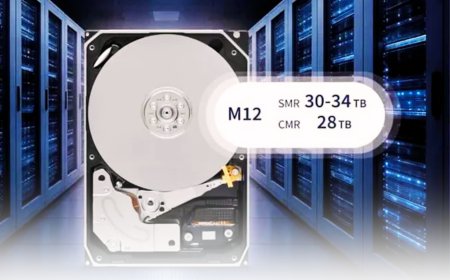
These advancements could lead to 3.5-inch hard drives with capacity approaching 100TB, giving access speeds comparable to SSDs but at a far lower cost per terabyte. This is especially crucial for AI workloads and cloud providers, which require both high speed and vast storage. Western Digital is also developing power-optimized HDDs for cold data. These drives consume approximately 20% less power and are intended for data that is rarely accessed yet must be available promptly. Unlike tape storage, which can take hours to recover data, these drives provide access in seconds.
In conclusion, Western Digital’s new HDD technologies show that traditional hard drives still have a strong future. By improving speed, capacity, and efficiency, these innovations help HDDs keep up with modern data demands. This is especially useful for AI, cloud storage, and large data centers. Together, these advancements make hard drives more powerful, cost-effective, and relevant than ever before.
Information referenced in this article is from Tech Spot