The Future of Enterprise Storage Remains HDD-Driven as Organizations Seek Reliable, Cost-Efficient Capacity
Enterprise storage demand is surging as AI growth, cloud expansion and rising data center capacity drive higher adoption of scalable, cost-efficient storage solutions, with analysts projecting strong future investment in large-scale data storage infrastructure.
 Tech Author
The world is producing more data than ever before, and this unprecedented expansion is influencing the future of corporate hard drives (HDDs) in data centres. While many projected that lowering NAND flash prices would cause SSDs to totally replace HDDs, the reality has been quite different. Both HDD and SSD technologies are evolving, with each having a distinct role in today's digital world.
After a challenging era marked by supply concerns and decreasing demand, HDDs are making a significant recovery. In 2022 and 2023, HDD manufacturers saw significant decreases in shipments. Even major flash manufacturers struggled at this period. However, by 2024, the market had recovered strongly. Analyst reports indicate a 42% increase in high-capacity HDD sales, a 39% increase in total HDD capacity, and nearly 50% revenue growth. This resurgence demonstrates that HDDs continue to dominate large-scale storage, particularly in cloud and hyperscale data centres.
Cloud, AI and Hyperscale Data Centers Fuel Storage Boom
The biggest demand driver for storage today is the explosive rise of AI, cloud computing and large-scale data center construction. Hyperscalers now operate more than 1,100 data centers worldwide, and this number is expected to triple by 2030. With cloud infrastructure spending crossing $106 billion per quarter, the need for affordable, scalable storage is stronger than ever.
Most of this storage still depends on HDD. In fact, 89% of the data stored by top cloud providers remains on HDD, mainly because it offers the lowest cost per terabyte. While SSDs are essential for high-speed workloads, they cannot yet replace HDDs at hyperscale levels. NAND manufacturing limits also mean SSD supply will fall short of future data demands, keeping HDDs relevant for years ahead.
HDD and SSD Moving Toward a Balanced Storage Future
Instead of competing, HDDs and SSDs are evolving together. Data centers typically use SSDs for fast access and HDDs for long-term bulk storage. As AI workloads expand, SSDs are used for high-speed tasks, while HDDs remain the default for storing massive datasets needed for training models and long-term retention.
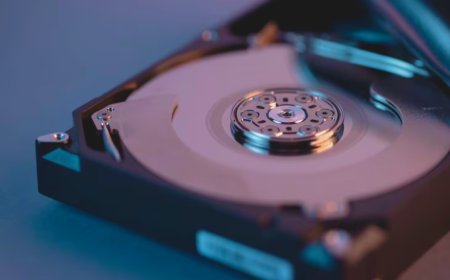
HDD technology is also advancing rapidly. Manufacturers like Seagate and Western Digital are introducing HAMR (Heat-Assisted Magnetic Recording) drives with capacities moving from 32TB to 50TB and beyond. Multi-actuator designs and additional platters are improving read-write speeds and density. These innovations show that HDD is not outdated, it is evolving to meet modern enterprise storage needs.
HDD Expected to Remain the Leader in the Future of Enterprise Storage
Analysts predict that nearline hard drives will continue to carry the majority of storage demands in the next years, indicating a bright future for HDD. While SSD, magnetic tape, and optical storage will expand, HDD is expected to remain the foundation of business storage because it provides the best blend of price, durability, and large-scale capacity.
As global data creation grows at an unprecedented rate, no single technology can cover all storage requirements. The future will be based on a hybrid storage ecosystem in which HDDs, SSDs, and other storage technologies work together. HDDs will continue to support cloud platforms, large data centres, and AI-driven workloads, ensuring dependable and cost-effective storage for organisations that handle massive amounts of data.