Seagate Pushes Hard Drive Limits Using HAMR Technology, Signaling Massive Future Enterprise Storage Growth
Seagate reveals a major HAMR technology breakthrough, reinforcing the future of high-capacity enterprise hard drives as AI, cloud storage and data center demand drive next-generation scalable and cost-efficient storage infrastructure.
 Tech Author
Seagate recently unveiled a huge update that demonstrates how hard drive technology is continuously evolving, even in a world dominated by SSDs. The company stated that it successfully tested 6.9TB hard drive platters in its laboratory with HAMR technology, setting the way for considerably higher-capacity storage in coming years.
Currently, Seagate's largest commercial hard drives, including its 30TB enterprise HDDs, rely on ten 3TB platters stacked inside a single drive. While this technology now provides vast storage, Seagate's new innovation indicates that each platter could eventually hold more than twice as much. With 6.9TB platters, a single hard disk can potentially reach 55TB to over 70TB without changing its physical size.
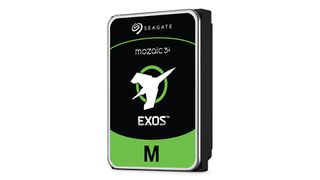
This advancement is made possible by Heat-Assisted Magnetic Recording or HAMR (an advanced hard drive technology that uses controlled heat to store data more densely, enabling much higher storage capacity without increasing drive size). HAMR uses a tiny amount of heat while writing data, allowing bits to be packed much closer together on the disk surface. This result in far higher storage density compared to traditional hard drives. In current products, Seagate combines HAMR with its Mozaic 3+ platform (Seagate’s advanced hard drive platform that improves recording precision by using smaller media grains, helping achieve higher storage density and better performance), which improves precision by reducing magnetic grain size. Applying these methods to larger platters is what makes these future capacities possible.
Users should not expect to see 6.9TB platters in products immediately. Seagate has stated that these platters are still at the experimental stage and are unlikely to be used in real-world drives before 2030. Before achieving that milestone, the business intends to gradually introduce 4TB, 5TB, and 6TB platters, which are scheduled to go into production between 2027 and 2029. Looking further ahead, Seagate predicts platter sizes would eventually reach 7TB to 15TB after 2031. If this path holds true, petabyte-scale hard drives could be available within the next two decades.
Despite the rapid growth of SSDs, traditional hard drives remain essential for data centers, cloud storage, and AI workloads. They continue to offer the best cost per terabyte, making them ideal for storing huge amounts of data over long periods. With the global rise of AI and data-driven services, demand for high-capacity enterprise storage is only increasing. Seagate’s latest HAMR milestone clearly shows that hard drives are far from outdated. Instead, they remain a critical backbone of modern data storage infrastructure, especially where scale, reliability, and affordability matter most.
This article is based on information from Yahoo