Microsoft Glass Storage Breakthrough Could Store Digital Data for 10,000 Years and Transform Long-Term Data Archiving
Microsoft Project Silica introduces glass data storage technology that can preserve digital data for up to 10,000 years. Using femtosecond lasers, this breakthrough could transform long-term data storage, archival systems, and AI data preservation.
 Tech Author
The world generates more digital data than ever before. From images and emails to scientific research and artificial intelligence models, the amount of digital information generated every day is increasing rapidly. As technologies such as artificial intelligence, cloud computing, and big data continue to advance, the need for long-term and dependable data storage becomes more critical than ever.
Researchers at Microsoft claim they may have discovered a solution that could revolutionize the future of data storage. The business created a new method to store digital data inside solid glass as part of a project named Project Silica. Researchers believe that this approach has the potential to safely retain information for up to 10,000 years.
Why Traditional Data Storage Has Limits
Today, the majority of digital information is stored on devices such as hard drives, magnetic tapes, and solid-state drives. While these technologies are widely used, they will not persist indefinitely. Storage devices gradually degrade over time, potentially resulting in data loss or corruption. Because of this issue, organizations must routinely copy and transfer data to new storage devices to ensure its integrity. This method involves time, effort, and ongoing maintenance. Researchers believe that glass storage technology could solve the long-term data preservation challenge.
How Data Is Stored Inside Glass
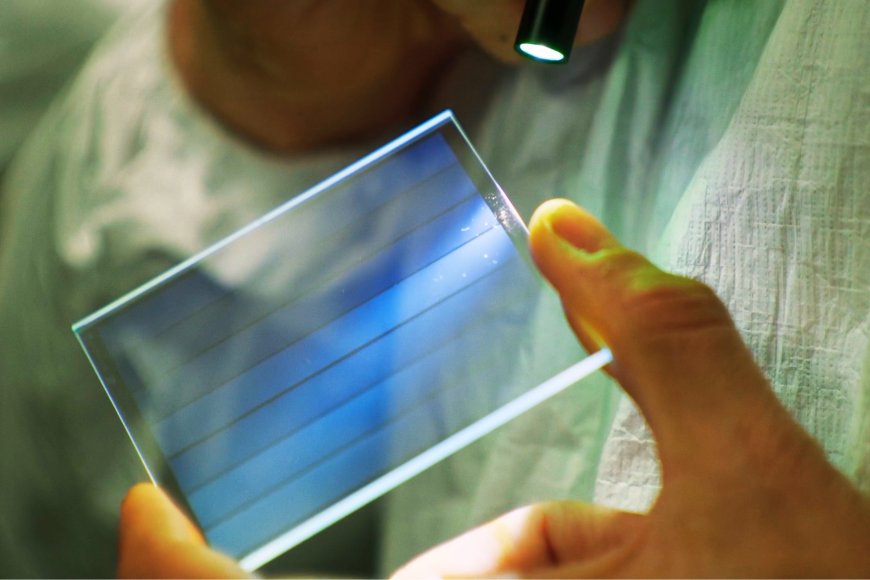
The technology used in Project Silica works with extremely fast lasers. Scientists use femtosecond lasers, which fire pulses that last only one quadrillionth of a second. These powerful lasers can write data deep inside a piece of glass without damaging its surface.
Instead of storing information as flat digital bits, the laser creates tiny three-dimensional structures called voxels inside the glass. These voxels act like 3D pixels that represent digital data.
Initially, researchers used a special type of glass called fused silica, which is expensive. But new research has shown that borosilicate glass, commonly used in kitchen cookware, can also work for this technology. This discovery may help reduce costs and make glass data storage more practical.
Real-World Testing of Glass Storage
Microsoft has already tested this technology in real-world circumstances. In 2019, researchers successfully kept the 1978 Superman film within a small piece of glass. The technology is also in use at Norway's Svalbard Global Music Vault, which aims to preserve important music recordings for future generations.
The Process of Reading Data from Glass Storage
Reading data from glass storage necessitates the use of sophisticated automated technologies. Robotic systems pick up the glass pieces, and powerful scanning equipment interprets the microscopic patterns written inside. A neural network system then decodes the stored data. One significant advantage of this technology is that the glass does not require constant power to maintain the data. Electricity is only required when data must be accessed.
Why Glass Storage Could Be the Future
Glass has many advantages as a storage medium. It's extremely resistant to heat, humidity, electromagnetic interference, and physical harm. Because of its resilience, it may provide a far more sustainable and long-term storage solution than current methods. If this technology becomes generally available, it has the possibility to enable governments, academic organizations, and businesses securely store crucial information for thousands of years.
In a world where digital data is becoming an integral part of our history, science, and culture, technologies such as glass data storage may play a critical role in preserving information for future generations.
Information referenced in this article is from The Indian Express