
India Plans to Develop Its Own GPU Chip Within 2 Years Under Semiconductor Mission 2.0
India plans to develop its own GPU chip within 24 months under Semiconductor Mission 2.0 to boost domestic chip manufacturing and reduce import dependence.
 Tech Author
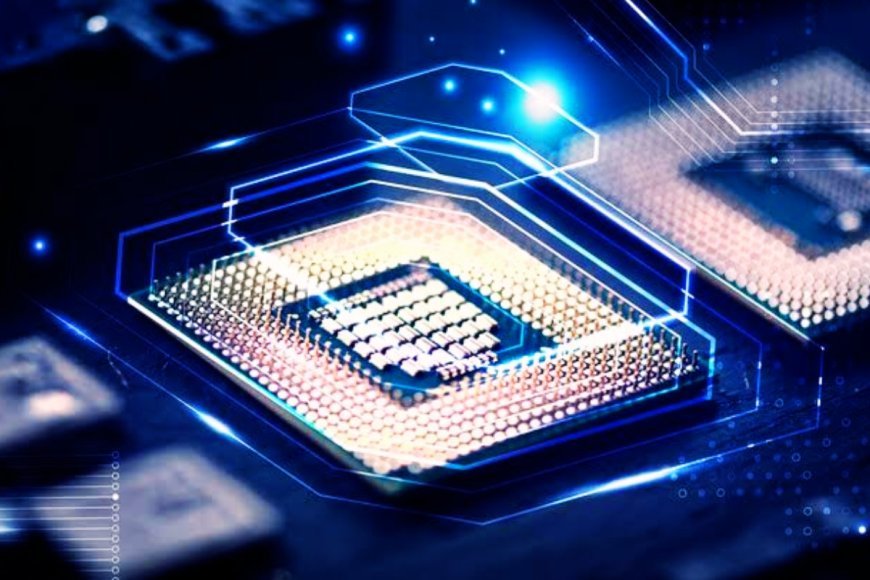
India intends to create its own Graphics Processing Unit (GPU) over the next two years as part of its attempts to boost the domestic semiconductor industry. The move intends to lessen the country's reliance on foreign chip suppliers while also addressing the growing need for artificial intelligence (AI) technologies. S. Krishnan, Secretary of the Ministry of Electronics and Information Technology (MeitY), stated this goal during an interview on November 4. He stated that the government intends to produce an indigenous GPU under India Semiconductor Mission 2.0, with the project projected to take approximately 24 months.
The GPU project is part of India's broader effort to build a complete AI hardware and software ecosystem. This includes everything needed to develop and run AI systems, from energy supply and accelerator chips to computing infrastructure, servers, AI models and applications. Indian companies such as VVDN, Kaynes and Avalon are already involved in server manufacturing. Meanwhile, the Centre for Development of Advanced Computing (C-DAC) has developed its Rudra server range to support AI-related workloads.
India is also developing its own processors through the homegrown SHAKTI and VEGA projects, both of which use the open-source RISC-V architecture. However, these are CPU designs, not GPUs. CPUs handle general-purpose computing tasks, while GPUs are designed to process large numbers of calculations simultaneously, making them particularly useful for AI workloads.
India's efforts to develop domestic processors began several years ago. IIT Madras introduced its SHAKTI processor project in 2019, while C-DAC has continued developing the VEGA processor family. These processors are being explored for applications such as sensors, smart devices, robotics and other connected equipment. Developing indigenous CPUs, GPUs and server infrastructure could help India reduce its dependence on imported technology and strengthen its ability to build and operate AI systems domestically.
The government is also supporting local chip development through its Design-Linked Incentive (DLI) scheme. According to MeitY, 24 companies have received support under the programme and later attracted private investment.
India's semiconductor market is currently valued at around $50 billion and is expected to reach nearly $100 billion by 2030, according to the India Electronics and Semiconductor Association. With its planned indigenous GPU, local processor projects and growing chip manufacturing activity, India wants to capture more of this market through domestic technology development. However, the proposed GPU is still at an early stage, and the government has not yet named the company that will develop it.
This article is based on information from Tom's Hardware