Google Tests AI Data Centre in Space With Project Suncatcher Satellite
Google’s Project Suncatcher satellite has completed its first AI test in orbit, marking a step towards solar-powered AI data centres in space.
 Tech Author
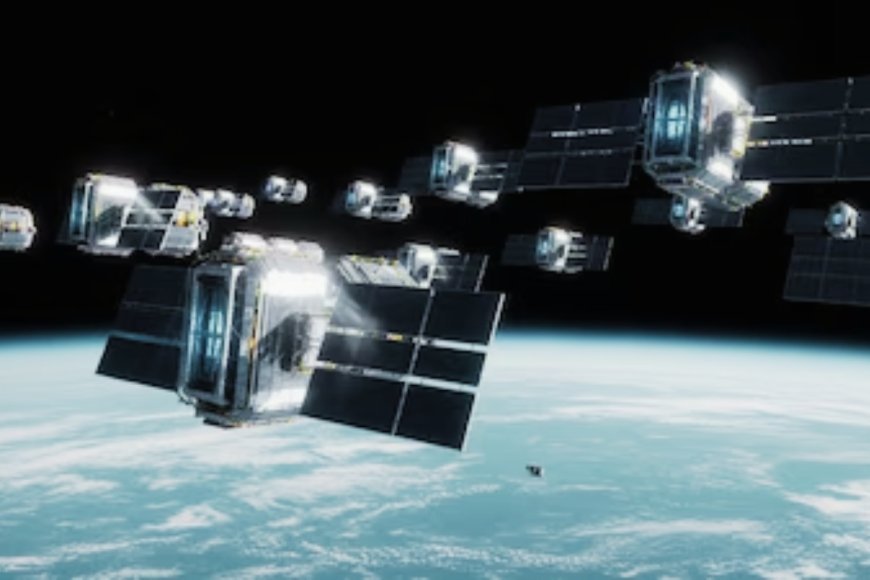
Google has successfully conducted its first artificial intelligence (AI) test with a satellite in space. The test is part of project Suncatcher, the company's research effort that aims to investigate the possibility of running AI data centers in space using solar-powered satellites.
On October 1, the prototype satellite was launched aboard a SpaceX Falcon 9 rocket alongside over 100 other satellites. After running various system checks, it successfully received an AI prompt, processed it in orbit, and returned the response to Earth.
Google CEO Sundar Pichai described it as a significant milestone for Project Suncatcher. During the test, engineers asked Google's Gemma 4 AI model to compose a brief poem about space. The spacecraft created a haiku and successfully sent it back to Earth.
The satellite carries four Google Tensor Processing Units (TPUs), which are special chips designed to handle AI tasks. However, its power supply is currently limited. It can generate up to 1 kilowatt of electricity, which is not enough to run all four chips together. As a result, the satellite can operate only one TPU at a time for around 20 minutes.
Google is now testing whether these AI chips can work reliably in the difficult conditions of space. One major challenge is radiation, which can change stored data and affect computer operations. The company wants to understand how its AI hardware performs under real space conditions.
Google plans to launch two additional Project Suncatcher satellites in 2027 if the current tests are successful. These satellites will have better power-generation systems and test laser-based communication links that allow spacecraft to exchange data.
The long-term goal is to create networks of solar-powered satellites that collaborate to do large AI tasks. Google believes that space can provide more constant solar power than Earth, decreasing the need for massive storage installations. However, constructing a cost-effective AI data center in space remains a long-term objective, with Google aiming for the 2030s. The successful first AI test is an important step toward understanding how future AI computing systems might operate beyond Earth.
Information referenced in this article is from India Today