Google Gemini 4 Argon Unveiled With Advanced Coding, Finance, Legal and Cybersecurity Skills
Google has introduced Gemini 4 Argon, a new AI model built for complex, long-running tasks across coding, finance, legal work and cybersecurity.
 Tech Author
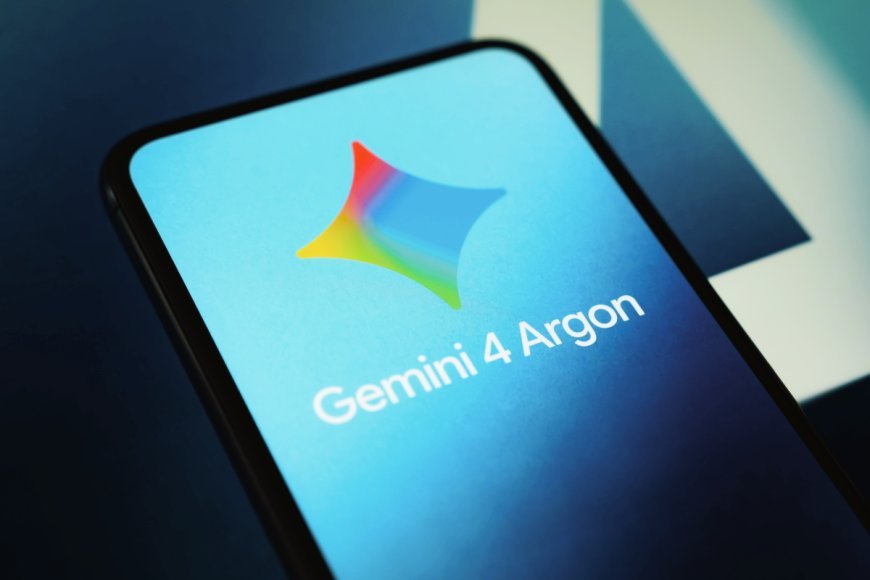
Google has unveiled Gemini 4 Argon, the first model in its new Gemini 4 series and what the company describes as its most capable AI model to date. The Google AI model is designed to handle longer and more complex tasks, including software development, legal analysis, financial work and cybersecurity.
The model is not being released to everyone immediately. Google is initially making Gemini 4 Argon available to a limited group of cybersecurity experts through its Fairwind Program. The company plans to expand access to paid API customers and Google AI Ultra subscribers, although it has not announced a specific date for the wider rollout.
Google says Gemini 4 Argon outperformed competing models from OpenAI and Anthropic in 13 of 18 benchmarks. In the DeepSWE software engineering test, Argon achieved a score of 77.9%, ahead of Claude Opus 5.5 at 74.2% and GPT-6 Astra at 74.1%. Google also reported strong results in legal and financial tasks. However, Argon does not lead every benchmark. GPT-6 Astra performed better in some software engineering and computer-use tests, while Claude Opus 5.5 came out ahead in other areas.
Google has also expanded Argon’s output limit to 1 million tokens, up from 64,000. The larger limit allows the model to process and work through significantly longer tasks without having to stop and restart. Google says its employees have been testing Gemini 4 Argon for several weeks, including in large-scale technical tasks.
AI agents powered by the model reportedly helped Google free more than 300 TiB of memory across its data centres. The company has also used Argon to assist with migrating C/C++ code to Rust. Security company Wiz also used the model to identify a critical vulnerability in healthcare software that earlier AI models had reportedly failed to detect.
Google is placing strong emphasis on Gemini 4 Argon safety as it prepares to make the model more widely available. The model is trained to refuse requests that could facilitate cyberattacks or the development of dangerous weapons. Google also says Argon has been designed to defend against prompt injection attacks, where hidden or malicious instructions attempt to manipulate an AI model’s behaviour.
Google’s cautious rollout reflects the capabilities of the new model. With its large context window, advanced coding abilities and cybersecurity performance, Gemini 4 Argon could become a significant competitor to OpenAI and Anthropic as Google expands its Gemini 4 lineup.
This article is based on information from Times of India