RBI Proposes UPI Security Checks Where Users Can Confirm, Cancel or Delay Risky P2P Payments Before Completing the Transaction
RBI UPI fraud prevention plans may add payment confirmation prompts for risky P2P transactions, as Indian banks seek stronger digital payment security while avoiding delays that could affect fast UPI payments.
 Tech Author
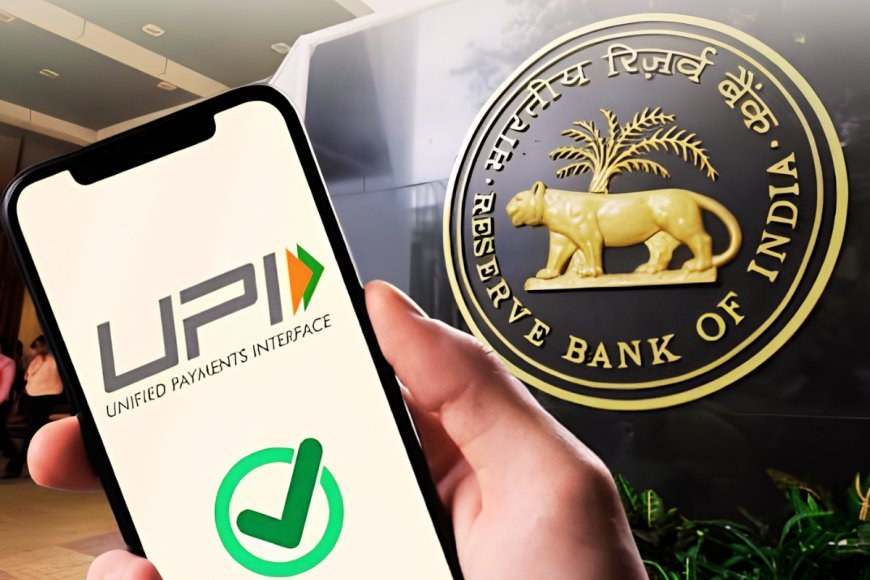
Indian banks want targeted confirmation checks for unusual UPI transfers instead of a blanket one-hour delay, aiming to improve fraud protection without slowing down everyday payments.
Indian banks are exploring new ways to reduce UPI fraud and digital payment scams without making online transactions unnecessarily slow or complicated. Several banks have proposed adding an extra confirmation step for certain peer-to-peer (P2P) payments that appear unusual or potentially risky.
Under the proposed system, a payment app could display a confirmation message before the money is credited to the recipient's bank account. If the sender selects Yes, the payment could be completed within seconds. Selecting No would cancel the transaction, while failing to respond could result in the payment being processed after one hour.
The proposal has been shared with the Reserve Bank of India (RBI) as banks consider measures discussed by the central bank to address the growing problem of digital payment fraud. The RBI has discussed delaying the credit of certain payments rather than transferring money instantly. Banks, however, are concerned that applying a fixed one-hour delay could make digital payments less convenient and potentially push some users back towards cash.
Instead, banks want the additional confirmation prompt to appear mainly when a transaction shows unusual behavior. Examples could include a payment made at 2am, a transfer to someone the customer has never paid before, or a payment to a newly opened bank account. Newly created accounts can sometimes be used as money mule accounts, where funds obtained through scams are received and moved on behalf of fraudsters. Some banks have also suggested increasing the proposed ₹10,000 transaction threshold to ₹20,000 or ₹25,000 after monitoring how the system performs in real-world use.
The proposal comes as digital payment fraud in India continues to increase. In Authorised Push Payment (APP) fraud, victims are manipulated, deceived or pressured into making and approving the payment themselves. Banking sources said that although only around 2% of transactions may exceed ₹10,000, that still represents a significant number of payments because UPI processes billions of transactions every month.
The National Payments Corporation of India (NPCI) is reportedly concerned that adding too many confirmation steps could create unnecessary friction for users. Banks also believe that simply delaying payments may not be enough to stop certain investment scams or cases where account holders knowingly participate in financial crimes.
The additional checks would mainly target P2P transactions rather than standard merchant payments. However, some small businesses use QR codes linked to savings accounts instead of dedicated merchant accounts. As a result, certain payments that effectively function as merchant transactions could also be affected.
The need for stronger UPI fraud prevention has become more pressing as online scams continue to rise. Reported digital fraud cases increased from around 2.6 lakh in 2021 to 28 lakh in 2025, while the reported value of fraud climbed from ₹551 crore to ₹22,931 crore.
The RBI and banks are therefore looking for a balance between UPI payment security and the speed of digital transactions. Targeted confirmation prompts for unusual payments are now being considered as one possible way to strengthen fraud prevention without adding unnecessary delays to routine UPI transfers.
Information referenced in this article is from ET CISO